


 Dec 13, 2025
 3 min read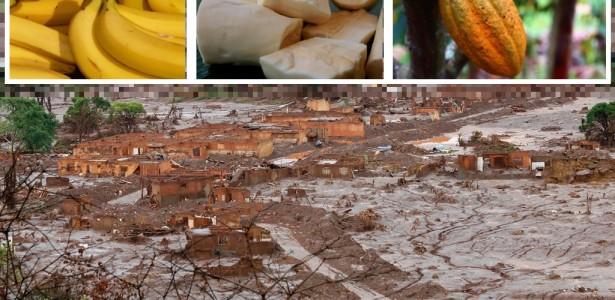
This work also assesses the risk of consuming cacao and cassava grown in Linhares (es), an area affected by the collapse of the Fundão Dam (MG) 10 years ago.
The research group found that contaminated soil, which continuously flows through food, can cause cancer due to the ongoing build-up of toxins.
This work also assessed the risks of eating cacao and cassava planted in Linhares (ES), which was affected by the Fundao Dam (MG) collapse ten years ago.
This work also assesses the risk of consuming cacao and cassava grown in Linhares (es), an area affected by the collapse of the Fundão Dam (MG), ten years ago.
This group's research suggests that continued consumption of raw foods can lead to a risk of exposure (Pixabay and Wiftiimbeia chixmons).
Karina Ninni |Santrito Santo (UfsP) and the University of Santiago de Compostela and the University of Santiago de Compostela and the University of Santiago de Compostela and the University of Santiago De and the University of Santiago assessed the risk of consumption of Santyroni and cocoa pulp, the risk of consumption of Santiago and cocoa pulp in the Acce River in liners (ES) in November 2015 in the province (Mg) Regional material due to the collapse ofthe Toll Dam accepted.
Cadmium, chromium, copper, copper, copper, copper, copper and lead in people combined with metal waste.The team found that consumption by six girls and below poses a health risk.
"Our group studied the effects of the dam collapse for years. We received the first sample seven days after the accident and immediately understood that there was a direct risk of contamination of plants, soil, water and fish. But the question remained: Does this contamination pose a risk to human health?", recalls Tiago Osório, the agronomist of the College and Société de Quéirée.Agriculture at the University of São Paulo (Esalq-USP).
In an article published in Environmental Geochemistry and Health, the group is dedicated to answering this question, revealing how plants source potentially toxic elements (PTE), waste -related, stores them in their edible parts, and how this material reaches the trophic chain.The article is part of Amanda Duim's doctorate in Esalc.As well as having already led to seven publications in international journals, the DUIM thesis has won two awards in 2025: USP Dissertation Award, in Sustainability and the Capes Dissertation Award.He received support from FAPESP through a doctoral scholarship.
FAPESP support for the group's work includes two postdoctoral fellowships (20/12823-5 and 21/00221-3);two research grants (23/01493-2 and 22/12966-6);scholarship of the Young Doctoral Students Program and the Scientific Initiative Scholarship.
According to the point, changes in this article
"First of all, you need to know which substances are present and which substances, to understand the biochemicals that are free for their release", explains Osoo.
Duim began his PhD in 2019 working with plants from flooded regions to remediate polluted environments.“We evaluated cultivated and native species. In the case of the latter, we wanted to know how they influence the dissolution of iron oxide and, in this process, try to understand whether the EPTs associated with these residues enter the plant and how, since different species have different ways of accumulating EPTs,” explains the researcher."The idea was to find out which was the best native species to remediate polluted environments and we identified more than one species capable of performing this function, with results already published. In the case of cultivated species, we wanted to know if the EPTs would transfer to the fruits and edible parts of the plants," he explains.
We collected the soil and plant and without shell, the roots, leaves, foliage and fruits were transferred and mixed into the solution and mixed into the solution. We presented the concentration calculation. Comparing the amount in the solution compared to the weight of the contaminated material, this determines the concentration of IPTrights, which is defined in that kilogram of dry biomass.
In banana and cassava, all EPTs (except grapes) accumulated more in underground parts such as roots and tubers than in aerial parts.On the other hand, cacao showed high EPT accumulation in aboveground parts (stems, leaves, fruits).In addition, the concentration of copper and lead in the fruit pulp exceeded the limits set by the Food and Agriculture Organization of the United Nations (FAO).
When the team saw that concentrations of EPT in the cultivated plants, including the edible part, were higher than recommended, they decided to conduct a risk analysis for fruits and tubers.
Health hazards
Scientists evaluated the risk of consuming banana fruit, cassava root and cocoa pulp by calculating the risk ratio (RQ), risk index (RI) and total risk index (IRT) for children (up to 6 years of age) and adults (over 18 years of age).RQ is the ratio between the average daily intake of a chemical and the corresponding reference intake.IRT is an important indicator for assessing potential non-cancer health risks associated with EPT exposure (should be less than 1 to indicate low risk).
"These elements naturally exist in the environment, we come into contact with them in low concentrations, but in the case of a disaster like Mariana, we have to redouble our attention when we expect an increase in exposure," says Tamires Cherubin, doctor of health sciences and author of the paper.The most commonly used method is to calculate the bioavailability risk of these elements, taking into account that exposure to certain concentrations can cause significant health damage, such as kidney and heart problems, gastrointestinal discomfort, lung damage, when exposure is by inhalation, and other more serious risks, such as skin problems or eye irritation.
Factors such as consumption of native plants by the population come into play when calculating the risk analysis.Based on data from the Brazilian Institute of Geography and Statistics (IBGE), the researchers also estimated how much food the local population receives from abroad and how much they eat from food grown there.Other factors include the duration of exposure (how many years the person consumes the product), the level of consumption relative to body mass in adults and children, and the time it takes for consumption to produce any adverse effects.
"According to the daily intake of pollutants approved in the literature, we have 0.5 - 1.0 mg / kg-1 nickel, 0.8 - 2.3 zinc's litce and 50.0 mg / kg-1 for mg / kg-1, Details Cherubin.
Although the IRT for most of the analyzed elements is below the risk level, the consumption of this food in cereals does not lead to a high risk, as a result of bananas in children, exceeding the health threshold.The main scale of the main risk factor is also a high concentration of cadmium, which is higher than recommended by FAO.According to scientists, long-term exposure, even at low doses, can cause irreversible damage to the brain, including IQ, attention deficits and behavioral disorders.
The group is responsible for the long-term growth of the topaz color, which in some cases is at cumulative risk."The time of discovery, said Carquinella, the life of Brazil was caused after 75 years! This rate of interaction has the potential to cause different types of reaction, which has the potential to affect the central nervous system. And depends on the metathesis.
O artigo From Tailings to Table: Risk Assessment of Potential Toxicants in Food Crops Grown in Mines Affecting Soil: https://doi.org/10.1007/s10653-025-02770-9.
Adincia Passpesse Lefecon's news can be easily identified by creative partners (CC-IN-ND), other digital or print media.The effect of ITINCIA, the source of the content and the name of the reporter (if any) must be indicated.Compliance with these standards using the HMTL button below the list in the crowded digital repair policy.