

 Dec 05, 2025
 3 min read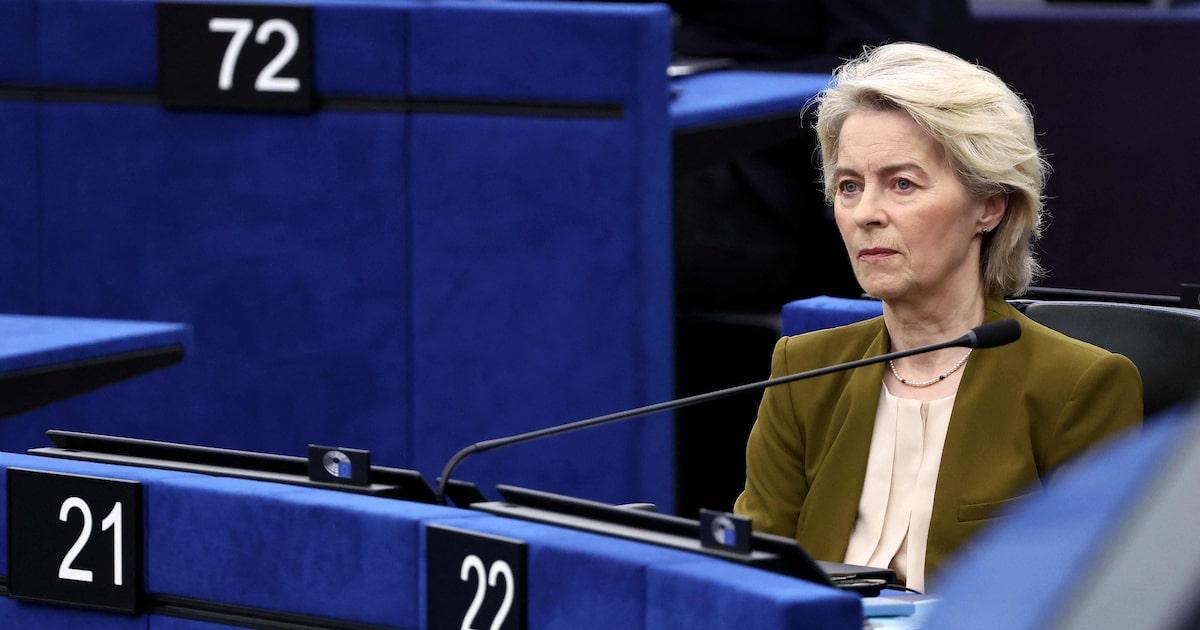
The European model has proven insufficient for a world characterized by geopolitical competition
Playing a central role in the international order and beyond its borders.From playing a key role in energy events, Europe is fighting for influence over external actors such as Gideon Rachman during the defense and China, bank finance, this phenomenon reflects a new scenario.China's technological competition and US tariffs to adequately respond to Russia's invasion of Ukraine reflect its current fragility and internal divisions.
Another consequence of this lack of clarity is the ongoing negotiations over the EU's trade agreement with Mercosur.While Germany leads the group in favor of ratification, France is running against it.The result is clear: for decades, Europe has lost political and economic space in South America, where the United States and China are the main players today.Similar dynamics are clearly observed in the African continent and the Middle East.
In most of the South, the image of Europe has been delayed in recent years. Many emerging countries see the monument as a player and accuse it of hypocrisy in demanding unity in Ukraine if it does not act on other human rights violations that have been marked by other human rights violations, such as Gaza.
But the challenges that Europe faces go far beyond the loss of influence in the world: its dependence on Chinese trade and inputs represents a strategic weakness built largely by European elites themselves.As German analyst Thorsten Benner has noticed, short -term profit benefits and "failure to understand China's long -term strategy have put us in this dramatic position."
Chinese advances in high-tech sectors and high-value-added manufacturing render obsolete the belief that Europe will always find excellent niches to offset Asian competition.Robin Harding, also in the Financial Times, sums it up roughly by arguing that China is moving towards a model where it wants to sell everything to the rest of the world but buy as little as possible.By this logic, "it becomes increasingly difficult to imagine how Europe in particular can avoid large-scale protectionism if it wants to retain any industrial sector".
In parallel, Russia is promoting disinformation campaigns to sway and influence European public opinion and is betting that internal divisions will affect EU support for Ukraine.The United States, although theoretically an ally, has openly interfered in European politics by supporting right-wing parties and candidates in Germany, Poland and Romania.
All this prompts the question: Although the European Union was designed for a world marked by multiliteracy, can the bloc function in the context of open competition?In an environment dominated by nationalist leaders like Trump, Xi and Putin, Europe's soft power - cultural appeal, cultural values, seems insufficient to establish a continent of autonomous power.
Moreover, as Rachman himself points out, the EU's institutional structure makes it difficult to react quickly. Crises that require decisions within hours face a system that must reconcile 27 governments, often with conflicting priorities. Beijing lures governments with investments, Moscow Eurosceptic leaders, Washington negotiates directly with European capitals, helping to bypass the bloc's common positions.
In order for Europe not to become peripheral in the game of powers, it is necessary to consistently strengthen the continent's strategic autonomy, focusing on four fronts: stronger investments in defense, cutting-edge technology and energy transition;reduced dependence on China and the United States;simplifying the political decision-making process, to prevent a few countries from paralyzing new strategies;and cutting red tape to spur growth.in normal times it would be a huge challenge.With the advance of Eurosceptic parties in the bloc's two largest economies - Germany and France - this could be politically impossible.It is up to Europeans to decide whether they will be creators of their own destiny or observers of the ambitions of others.