

 Nov 04, 2025
 3 min read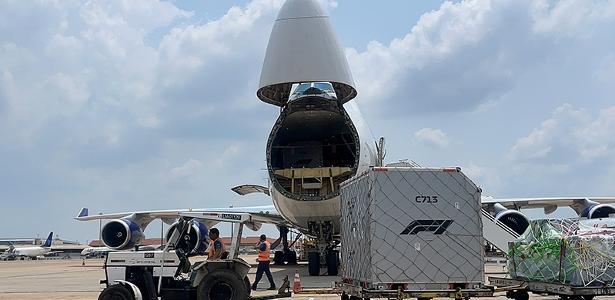
Watch scores, news, interviews, photos, videos and behind the scenes sports.Follow major sporting events in Brazil and around the world live.
How SP GP became a logistical nightmare for Formula 1
Read the news story
The project of Brazil does not work: the most expensive car and engine, 8 tons of electric transmission equipment and enter the Virasosos airport and go to Interlagos.The rest are garage panels and everything that is cheap, which comes by sea, as well as all events outside of Europe.The problem is that the Formula 1 calendar is full for many reasons, and Brazil is far from all other stages, and trying to achieve the goal of stability in the category.
That is why in recent years the position of the Brazilian stage has occupied two different positions, which does not affect the date much for the fans, but for those who work in the sport it is a big change in terms of logistics: sometimes the stage is "alone", there is no race before or after it, sometimes it is part of the so-called "three races in a row at the end of three weeks".
This year GP has no "neighbor".It will be held about two weeks after Mexico and two weeks before Las Vegas.In 2026, it will be the last leg of this sequence, starting from Austin in the United States and then going to Mexico City.
And the consensus is that there is no perfect way to fit Brazil into the current calendar: either you save on travel time and create massive burnout for those working in the sport, or people cross the Atlantic four times and avoid work for three weeks straight.
Yes, there are two ways to look at this.If you give a week off, people fly back home, which may be better for the body, but from a sustainability perspective, they have to fly back again the next race.Doing three tests in a row gives a much smaller window and reduces the footprint for passengers.
Paul Fowler, Vice President Motorsport at DHL, F1's logistics partner, to Esporte
When it comes to cargo, nothing changes, because cars go from Mexico to Brazil and from Brazil to Las Vegas, regardless of how the calendar is organized.
There are also at least three ships: What was in Orofin will then be taken to Las Vegas.Second for Mexico and third for Brazil.This cannot be changed due to travel dates.In general, five to six different ships are used to cover all 24 races during the season.
For DHL, which provides all the logistical solutions for F1 and all its equipment, how to create the paddock, more VIP space and what is needed to generate the images that are broadcast around the world, the teams and even the TV stations that cover the sport on the ground, the triple circuit means that at every place where F1 races, three teams are working almost simultaneously.
For us, and many teams have adopted it, each employee can choose not to go to three races each year and, if you avoid all three races.And now many teams, including us, have an assembly team, a race team and a breakdown team.The problem with triple rounds is that there is a time where you need three people [one in each location].
Let me explain: the material that arrives by boat is collected by a group that has nothing to do with the mechanics working during the weekend.They go to the track on the Wednesday before the race, to collect the car, which should be finished on Thursday, for the race on Friday.They will dismantle the car themselves on Sunday evening so that it can be quickly transported by plane, and then a third group will arrive to put the panels and everything else into containers.Placed to be sent to sea.From Brazil, everything must be returned to the factories to be renewed for next year.
Therefore, in terms of logic, it is the opposite of patience, everything is less than a moment and the bird is big, here "a team that built a laundry house" moved.
The problem at the moment, and for F1 to reach its zero carbon target by 2030, is more about managing people's journeys, from a logistical perspective.
When the car is not ready in Brazil
So, from that point of view, it's better to do Austin, Mexico and Brazil without 'breaks', right?But there are risks.Especially when we are talking about long distances, like the 7400 km between Mexico City and São Paulo, and little time.
Car transport continues on Monday.Because of the three planes - F1 uses eight 777s to transport equipment - the Mexican trip has been delayed until 2021.
Yes, it was strong.What happened was there was a problem with the weight of the plane when they were taking off in a lot of fog, which forced us to remove the fuel.Therefore, because of the surge in Mexico, we were unable to do so, so we had to wait for the right window and be flown to the nearest location.We went to Miami to wait to reach Brazil.
We arrived on Thursday.
It is no coincidence that talk of Brazil returning to the start of the calendar has surfaced in the archives.But still no perfect solution.The season starts in Oceania and then in East Asia and the Middle East due to Ramadan dates.Usually, it starts in the Middle East.It's hard to find a logical way to include Brazil in there.
But GP organizers say they are ready to change the date if necessary."It's more a matter of logistics for Formula 1 itself and its inclusion in the city's calendar of important events. Either way, we're always ready to improve the Formula 1 experience in São Paulo," São Paulo GP chief executive Alain Adler told Esporte.
Leave your opinion
The author of the message is, and is not, responsible for the comment.See UOL Terms.