


 Nov 17, 2025
 3 min read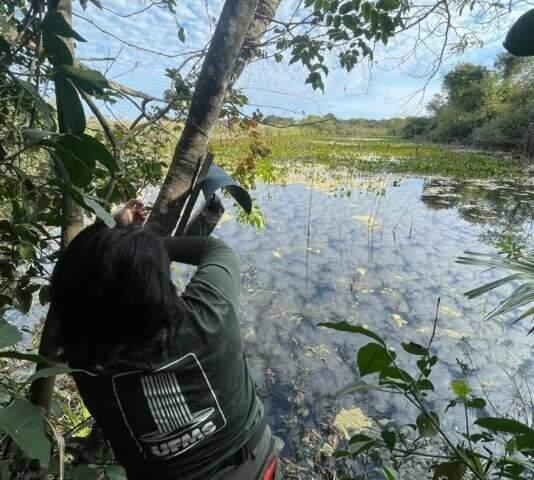
Jeff Bezos funds the pantanal monitoring project with artificial intelligence.Learn how bioacoustics can preserve biodiversity.
The third richest man in the world is financing the plan to control the pantana
The event was chosen by the fund created by Jeff Bezos for AI security activities.
According to Forbes magazine, PPBio-Pantanal (Pantanal Biodiversity Research Program), a collaboration between the Federal University of Mato Grosso do Sul (UFMS), Cornell University in the United States, and international non-profit organization The Nature Conservancy, has been selected for investment by the Bezos Earth Fund, founded by Jeff Bezos, the world's third-richest person and founder of Amazon.
Our AI tool summarizes the news for you!
PP Bio-Pantana, a partnership between UFMS, Cornell University and the Nature Conservatory, has been selected to receive $2 million from the Bezos Earth Foundation.The project, which selected more than a thousand proposals, focuses on the acoustic monitoring of the Pantana and May Biosphere Reserve in Guatemala.Led by researchers Liliana Pialti and Larisa Sugeja, the project uses artificial intelligence to monitor biodiversity and threats to ecosystems.The initiative combines advanced technologies with local knowledge studied The goal is efficient biomass conservation.
Work at Pantalo is selected from well-known companies from all sectors.K. Lisa Yang Forward Bioboussics safety, at the University, and AI that is intelligent AI.
- Read more
- Young people changed the best day of ability with faith, prayer and purple
-Ms remains on a severe thunderstorm warning, with the risk of hail and gusty winds
Through the announcement, Bezos Earth Fund wants to support innovative projects that use artificial intelligence to tackle global environmental challenges.In the first phase, 24 proposals were selected, and their coordinators participated in mentoring workshops and work with the evaluation team to align the project with the announcement objectives.In the final phase, only 15 initiatives are selected to receive up to 2 million USD.
The initiative focuses on acoustic monitoring of two biodiversity hotspots, including the Pantanal, to generate information on fauna and ecosystem health.Another hotspot being considered is the Mayan Biosphere Reserve in Guatemala, where the system will be used to detect threats to forests from illegal activities in real time.
The project is led by researchers Liliana Piatti, from UFMS, and Larissa Sayuri Moreira Sugai, from Cornell University.The collaboration between the institutions began three years ago, when the biouniversal monitoring project began through bioacoustics and environmental DNA, at the same time as it searched for important activities and improved monitoring tools and exercises.
The UFMS plays the role of facilitating and coordinating fieldwork, offering logistical support, assembling teams and ensuring that each step takes place in a robust way and appropriate to the special features of the Pantanal.K. The Lisa Yang Center provides equipment, specialist technical support, applies machine learning models to collected data, and trains Brazilian researchers and students to use these technologies.
Liliana Piatti stressed that the selection was highly competitive and followed rigorous technical evaluation, with support from partners such as Amazon Web Services, Google.org and Microsoft Research."We believe the decisive factor is the strength of Cornell's collaboration with globally recognized AI pioneers, UFMS and PPBio-Pantanal, representing a network of researchers and local communities with deep knowledge of the field. The combination of scientific excellence and regional commitment guarantees our place among the winners in this category," he said.
For the scientist, news of the approval was received with joy and responsibility.“Receiving investment from the Bezos Earth Fund means taking technological and structural steps towards more effective conservation by combining the most advanced artificial intelligence and bioacoustics with the traditional knowledge of the people living in the biome and the scientists dedicated to studying the Pantanal. This is also a very powerful symbolic solution that can serve as a developed incentive for the world to commit to studying the Pantanal planet.”
The coordinator of the Ppbio-Pantan Network, Professor Fábio Roquo Roque, emphasizes the impact of the internationalization initiative by encouraging the mobility and exchange of students and researchers between the organizations involved.
Receive important news from the state on WhatsApp.Click here to visit the Campo Grande news channel and follow our discussions.