

 Nov 10, 2025
 3 min read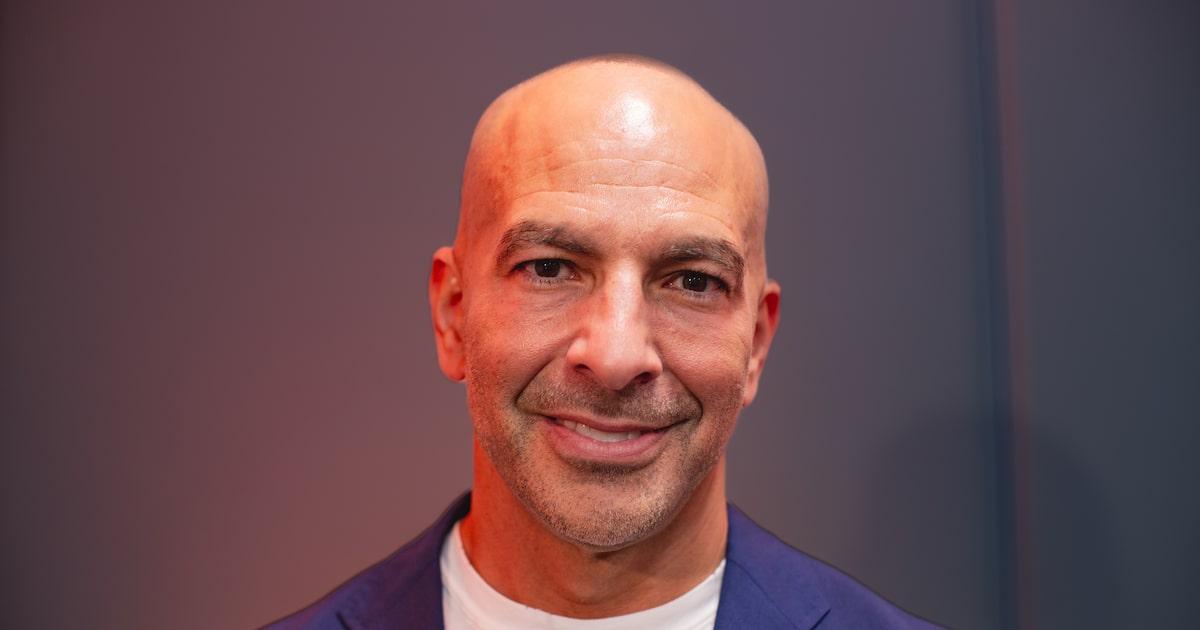
For best seller 'Best-Betlive' doctors, there is a need for effortless health solutions
These are the two biggest scammers in the PETERATION.interview market
For the Canadian-American expert and best-selling author, preventing the most deadly diseases is better than living forever.Cubel
One of the world's leading authorities on distance, the American-American doctor Peter Attia is not a big fan of the term that refers to his territory.For him, the word "historical" was "invented" by charlatans who make money by selling easy solutions - and without scientific basis - during scientific life.
In an interview with Estadão during his visit to Brazil this week, the author of the bestseller, better and better living sciences, in his opinion, are the biggest scams and myths to stop people from believing.
"The natural things you have to do - to want what you have, and you need to reach the governments in the 25th year.
Graduated in Medicine from the Stanford University of Stanford (USA), Atcia has become famous on personal followers and youtube, by focusing on the method he calls medicine 3.0.
As we explained at the panel held in São Paulo, this model is based on three pillars: 1) it values quality of life as much as the number of years lived (health x age), 2) it focuses on the prevention of chronic diseases rather than just treatment, and 3) individualized patient care.
One of his broad ideas explored during the presentation was the need to prepare for the last decade of our lives, which he called the minimum decade.
"Historically, this decade has not been the best period in a person's life. Your health, your body and your mind start to fail. But I think we should reverse that logic and prepare for this marginal decade by training for it the same way you would train for anything - you would prepare for a tennis tournament, a polo match or anything else, but that means 'going away physically, and it means that.'Going away, so scared,” Atiya said during the event.
"Unfortunately, most people will spend the last 13 to 17 years of their lives in poor health. This period should only last six months. I think most people would rather live to age 80 in very good health than live to age 90 and spend 15 years in poor health," he said.
If the goal for him is the quality of life, it is important to do "contagious engineering": - from the beginning of the future result and running back, it is important to identify the real at each level and training to fill the gaps.
Attia's recommendations for ensuring this "health reserve" for old age focus on five areas: nutrition, exercise, sleep, mental and emotional health, and additives, when necessary.
For him, these are the main defense factors against what he calls the “four knights” which bring “slow death”: cardiovascular diseases, cancer, neurodegenerative diseases (such as Alzheimer’s disease) and type 2 diabetes and other metabolic problems.
Atia's patients, many of whom are wealthy US executives, pay millions of dollars to receive follow-up and advice from experts on how to reach old age without major physical or cognitive impairments.
In a conversation with Estadão, Attia said that, while his recommendations for living longer and better include planning and starting exercise in the final decades of life in your 20s or 30s, intervention is still only beneficial at an older age, such as your 60s.
In the interview, he also talked about how to adopt healthier lifestyle habits even in the difficult context of big Brazilian cities, with an intense pace of life and endless demands, and few safe places to practice physical activity.For Atia, the most important thing is to start, even if it is with something small."Sometimes the enemy of good is trying to make something perfect," he said.
Attia also noted the difficulty of promoting healthier practices among the population in countries like Brazil with high levels of poverty and inequality."If you're worried about where your next meal is coming, or whether you're safe in your home or neighborhood, how can you worry about your blood pressure?" he asked.Until these basic needs are met, it is very difficult to think about preventing chronic diseases.
Read the interview below:
Always emphasize the importance of prevention so that we can act on our health before diseases occur.How can we talk about prevention in a way that motivates people and doesn't cause guilt?
I don't think there is any reason to feel guilty.I think that everything needs to be done according to the motivation of each person to want to avoid anything.Instead of changing this question to something like, "You should make more time to have fun with your friends," I'm going to deny it altogether.In other words, always collect something important to a person and to do this is the way.
You are criticizing what we can call the health care model, which only works when the disease already exists.But, in many countries, especially low and low countries, like Brazil, we see that the main challenge is still the entry into primary care.
I think it's hard to think about health when safety and other basic needs are not met.The reality is that until these basic needs are met, it is very difficult to think about preventing chronic diseases.If you're worried about where your next meal is coming from, or whether you're safe at home or in your neighborhood, how are you going to think about your blood pressure?
It still talks about the reality in Brazil, unfortunately we are one of the countries with the highest standard of living in the world.And it’s difficult for many people, especially in large cities such as San Diego, to continue performing manual labor in public workplaces like this.Even in this environment, what advice do you have to help people overcome these issues and get back to living a heavy life?
I think it is difficult.Again, it all comes back to safety.If you're not comfortable outside, it's harder to stay active.Exercising indoors is possible, but not necessarily enjoyable.That might mean going to the gym or using the treadmill instead of walking or jogging in the park.
But there are also things that can be done in companies and it's good, like heavy training or sporting events, for example.Now we are all busy, and we have to decide, "Can I make some time?"
Sometimes I think that the enemy of good is trying to end something.If a sedentary person does 15 to 30 minutes of physical activity a day, there will already be a big improvement in that person's health.
Constant thinking about it is the key to achieving a great life.But, looking at the real world, do you think this long-term association is over?More of an icon than an actual public health magazine?And can you beat him?
Yes, I think there are certain explanations for this movement.Of course I can only speak from what I see in the US.But in my opinion, in your opinion, we are all trying to prevent death and chronic disease, and that is to overcome chronic disease and quality of life.Good news.It's more reasonable than this crazy idea forever.
Speaking of crazy ideas: in your book you also mention that you don't even really like the word "length" because "it's a joke."What are the biggest myths, scams, or information in the longevity space today that people want to believe?
How much time do we have?(to laugh).We have three hours, right?
are important ... (laughs)
It is a myth - or something, a situation where people buy something that is created by people, and they sell parts "the results of that experiment. This is a scam. All that remains to be done is to put the sign on it. And it goes a lot.
I am very suspicious of people who offer solutions without solutions.The most common are hyperbaric oxygen therapy, stem cells, pepm and the like, but there is no evidence that these work.They are also expensive and they are all similar in that they do not require any effort.
But the things that really work (paying attention to how you sleep and eat and exercise) take effort.And they tend to be cheap.This might give us some clues (about what the scam is).
You often emphasize the importance of planning ahead for what we want to be the last decades of our lives.Why do you think people have such a hard time thinking long term?And for those who only start taking care of their health at the age of 60, for example, what else is possible?
Regarding the last question, the good news is that in many cases I have seen many examples of people who did not take care of themselves until they were 60 years old, and for some reason, they decided to change.
About the first question: I think we humans have a lot of trouble imagining the future.This may sound a little philosophical, but I don't think evolution prepared us for this.It wasn't an important trait when we evolved.We evolved to deal with the here and now: "Can I find a mate? Food? Shelter? Safety?"These are all immediate problems.And only after solving today's problem do we think about tomorrow.It is a modern creation, not natural to us.Some learn to do it, but it doesn't come naturally, it takes effort.